Massive Illegal Cigarette Factory Uncovered in Southern Bulgaria
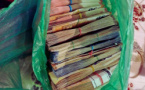
Authorities have uncovered what is believed to be the largest illegal cigarette factory ever discovered in Bulgaria
Crime | July 10, 2025, Thursday // 11:23
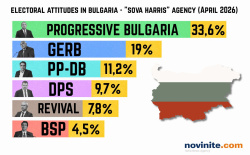
HOT: » Which party would you vote for (if you could) in the upcoming snap vote in Bulgaria on April 19?
 Send to Kindle
 The headquarters of Bulgartabac Holding. Photo by Monitor daily
Bulgaria's state cigarette maker Bulgartabac Holding, which is about to be privatized, completed 2010 with a net profit of BGN 20 M.
The company's financial performance was announced in a statement in which its management also said that the profit "confirms the consistent trend of positive financial results."
Bulgartabac's 2010 profit is 16.5 times larger than it was in 2009. The consolidated income from cigarette sales grew 22% year-on-year.
In 2010, 80% of the produce of Bulgartabac Holding was exported, compared with 53% in 2009, and only 31% in 2008.
In addition to its growing exports, the Bulgartabac Holding Group occupies 37% of the Bulgarian domestic tobacco market. 3.5% of Bulgartabac's income for 2010 came from the sales of tobacco leaves.
The Bulgartabac Holding Group features two cigarette plants – Blagoevgrad-BT and Sofia BT – and a tobacco processing plant, Pleven-BT. As a result of the good financial results, in the fourth quarter of 2010, the shares of Bulgartabac Holding gained 54.77% on the Sofia Stock Exchange, Sofia-BT – 66.04%, Blagoevgrad-BT – 30.26%, Pleven-BT – 40.03%.
Bulgartabac's improved financial results have been announced just as the Borisov Cabinet is preparing to privatize the company.
About a dozen strategic and financial investors have declared interest in the privatization of Bulgaria's state cigarette producer Bulgartabac Holding, according to Economy Minister Traicho Traikov.
Unofficial information reported in the Bulgarian media says that the bidders seeking to purchase Bulgartabac include companies from Bulgaria, Greece, and South Korea.
Bulgartabac, whose state management has been questionable in the recent years, is being put on the privatization table after its privatization has been mulled for years.
In January, Finance Minister Simeon Djankov reiterated earlier announcements that Bulgaria's government is determined to go ahead with the planned sale of the country's tobacco company, the biggest military plant and the minority stakes in electricity distributors.
The sale of Bulgartabac Holding AD, Sopot-based Vazovski Mashinostroitelni Zavodi or VMZ, and the minority stakes in the electricity distributors have been said to be a must-do task in 2011 due to the sorry performance of the state-owned companies.
The Economy Ministry revealed in January that the consultant Citibank has made preliminary inquiries with about 100 potential strategic and financial investors from around the world with respect to Bulgartabac's privatization in order to make sure that all "serious" investors that are not aware of the sale of the Bulgarian cigarette company.
According to the Ministry, there is a sufficient number of companies interested in the privatization of Bulgartabac because it is an attractive asset even in a time of crisis.
The Economy Ministry said it wants to find a buyer for Bulgartabac by the summer of 2011.
In spite of declarations in April 2010 that Bulgaria's Privatization Agency hoped to complete the sale of state-owned cigarette monopoly Bulgartabac in 2010, no such deal went through by the end of December 2010.
The consultant for the Bulgartabac sale, Citigroup Global Markets Ltd, was picked by the Bulgarian government in February 2010.
The two less profitable cigarette plants of Bulgartabac holding – in the cities of Plovdiv and Stara Zagora – were sold in 2009 through the Sofia Stock Exchange – for BGN 31 M and BGN 18 M respectively; the holding still owns the two larger and more consolidated factories in Sofia and Blagoevgrad as well as a number of commercial brands.

Authorities have uncovered what is believed to be the largest illegal cigarette factory ever discovered in Bulgaria

Starting in May, the price of cigarettes in Bulgaria will rise by 40 to 50 stotinki (coins) per pack

A rise in the excise duty on tobacco products starting April 1 will lead to an increase in cigarette prices by about 2.40 leva per pack

Belgium will become the first European Union country to ban the sale of disposable e-cigarettes

Bulgaria has the lowest excise tax on cigarettes in the European Union

Preliminary data from an online survey conducted by the Medical University - Plovdiv and the Health Care Foundation reveal concerning trends in smoking habits among children in Bulgaria

Up to 90 percent of construction and renovation workers in Bulgaria are operating outside the legal framework, according to entrepreneur Lozan Lozanov, who raised concerns about the lack of regulation in construction and installation services

Bulgarian Agriculture Minister Ivan Hristanov has said that milk prices in Bulgaria are falling for consumers while production costs for farmers continue to rise, creating increasing pressure on the sector.

Bulgaria saw a sharp rise in labor costs at the close of 2025, with total employer expenses per hour worked increasing by 13.9% in the fourth quarter compared to the same period in 2024, according to preliminary figures from the National Statistical Insti

Each December, several factories across the Midlands manage their busiest weeks with clipboards in hand.

Germany’s online gambling market has become one of the most closely observed case studies in digital regulation.

The digital age has fundamentally reshaped nearly every industry, and the gambling sector is certainly no exception.

Aniventure Comic Con Returns to Bulgaria with Star Guest Christopher Judge!
Global Fuel Shock: Oil Jumps Over 40% Since Iran War Began