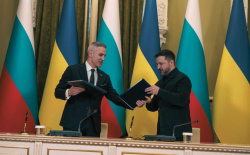
Vucic Claims Croatia Behind Attempted “Color Revolution” in Serbia
Serbian President Aleksandar Vucic claimed that Croatia was the foreign state most actively involved in what he described as an attempted “color revolution” in Serbia
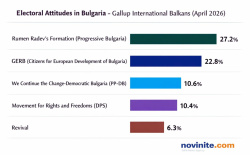
HOT: » Which party would you vote for (if you could) in the upcoming snap vote in Bulgaria on April 19?
 Send to Kindle
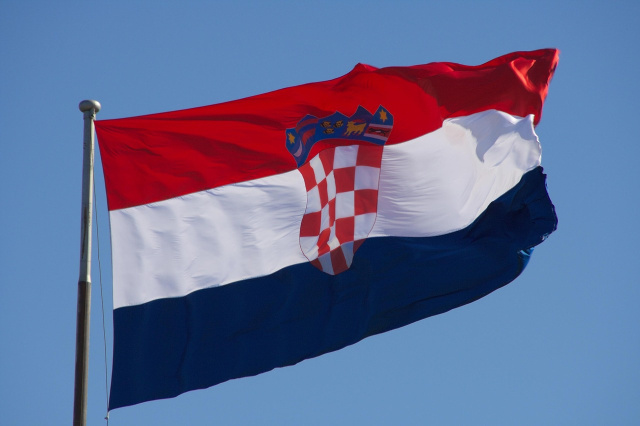 pixabay.com
Several thousand people gathered in Croatia’s capital, Zagreb, on Sunday for an anti-fascist march aimed at countering the country’s rising far-right sentiment and efforts to revise the history of World War II. The demonstrators voiced concern over the increasing visibility of nationalist groups, incidents targeting the ethnic Serb minority, and the use of pro-Nazi Ustasha symbols in public.
In recent months, right-wing nationalists have grown bolder. In early November, masked men disrupted a Serb cultural event in Split, performing the Ustasha salute. Earlier, a July concert in Zagreb by ultra-nationalist singer Marko Perkovic, known as Thompson, drew hundreds of thousands. The performer’s popular songs feature the salute, and some attendees display affiliated symbols. Following the concert, two MPs replicated the salute in parliament, while an October round table downplayed the scale of Croatia’s World War II death camp victims.
Organizers of Sunday’s march declared that fascists are no longer hiding and called for resistance against “violence, historical revisionism, and intimidation.” Protester Kristijan Kralj, an electrical engineering student, highlighted the danger of the Ustasha ideology’s resurgence. The original Ustasha regime, a Nazi puppet state, had persecuted and killed hundreds of thousands of Serbs, Jews, Roma, and anti-fascist Croats. Modern sympathizers, however, sometimes portray them as foundational national figures.
Marchers carried a giant banner reading “United against Fascism” and chanted “We are all anti-fascists” as they proceeded through central Zagreb on a cold, sunny day. Similar demonstrations took place in Rijeka, Pula, and Zadar along the Adriatic coast.
The anti-fascist rallies followed a series of extremist incidents in November targeting Serb cultural events in Zagreb and Split, raising fears of ethnic violence decades after the 1991–95 Serb-Croat war. Extremist groups have also attacked liberal politicians, foreign workers, and other communities, frequently using the Ustasha salute, “For the homeland — Ready,” during protests.
At the Zadar march, organizer Iva Davorija said young men in black clothing disrupted the rally by throwing firecrackers and red paint, yet authorities have been slow to intervene. Analysts note that Croatia’s shift to the right began after Prime Minister Andrej Plenkovic’s conservatives formed a coalition with a far-right party in last year’s election, leaving an ethnic Serb party outside the government for the first time in years. The trend intensified with mass events celebrating far-right figures like Thompson.
Prime Minister Plenkovic has denied ignoring the rise of extremist sentiment, accusing leftist opponents of exaggerating the threat and inflaming divisions. Croatia’s historical and political context is central to the tensions: after World War II, it was part of communist Yugoslavia, which disintegrated in the 1990s, leading to nationalist wars in which more than 10,000 people died. Croatia joined NATO in 2009 and the European Union in 2013.
The Sunday protests underscored widespread public concern about far-right extremism, historical revisionism, and threats to minority communities. Demonstrators emphasized their commitment to defending democratic values and preserving an accurate understanding of Croatia’s past, while rejecting the glorification of symbols tied to one of the darkest chapters of the country’s history.
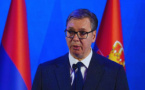
Serbian President Aleksandar Vucic claimed that Croatia was the foreign state most actively involved in what he described as an attempted “color revolution” in Serbia
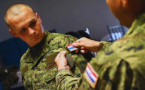
Earlier this month, Croatia welcomed its first group of conscripts at the Eugen Kvaternik military training center near Slunj, marking the return of compulsory military service, which had been suspended since 2007

The process surrounding Bulgaria’s transition to the euro is unfolding smoothly and compares favorably with similar experiences in other countries

Ana Knežević, president of the Consumer Protection Association in Zagreb, shared lessons from Croatia’s adoption of the euro in 2023, highlighting issues with change and price rounding that could guide Bulgarian consumers and merchants.

Croatia will assume full responsibility for monitoring and protecting its national airspace from January 1, 2026, deploying its Rafale fighter jets within NATO’s integrated air and missile defence framework,

Croatia’s 2025 tourist season has delivered a stark warning about the country’s position in the Mediterranean travel market
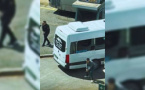
Turkish authorities have launched a full-scale investigation after a shooting outside a building hosting the Israeli consulate in Istanbul left two attackers dead, one wounded, and several police officers injured
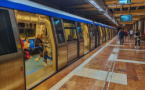
Fares for the Bucharest metro system are set to increase by 40 percent starting May 1, according to a draft regulation published by Romania’s Ministry of Transport and reported by Agerpres.
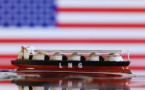
The United States is expanding shipments of liquefied natural gas to Southeast Europe and Ukraine via Greece, according to remarks by the US Ambassador to Athens, Kimberly Guilfoyle
The European Public Prosecutor’s Office has formally requested that the immunity of 11 Greek members of parliament be lifted as part of an ongoing investigation into alleged misuse of EU agricultural subsidies
Greece has raised its minimum monthly wage to 920 euros as of today, marking an increase from the previous level of 882 euros, according to official information
Former Foreign Minister of North Macedonia, Bujar Osmani, has said that the current political trajectory in Skopje is the result of a broader balance of external and internal factors, including what he described as influence from anti-European forces and

Aniventure Comic Con Returns to Bulgaria with Star Guest Christopher Judge!
Global Fuel Shock: Oil Jumps Over 40% Since Iran War Began