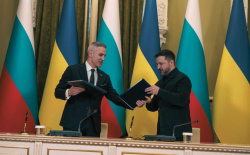
Vucic Accepts Protest Demands, Confirms Early Parliamentary Elections in Serbia
- Tweet
 Send to Kindle

Serbian President Aleksandar Vucic announced on Sunday evening that he has accepted the central demand of the ongoing protests, confirming that early parliamentary elections will be held next year. Speaking in front of the National Assembly building in central Belgrade, Vucic said the decision was made in response to protesters’ calls, while expressing confidence that the ruling camp would prevail at the ballot box across the country.
Addressing supporters, the president stated that elections would take place soon and argued that his opponents would be disappointed once the votes were counted. He framed the political confrontation as one between, in his words, strength, faith and unity on one side and hatred on the other. Vucic also predicted that the coming year would be among the most successful in Serbia’s modern history, highlighting planned investments in road and railway infrastructure as key achievements.
Vucic stressed that he was proud the protests had passed without fatalities, drawing a comparison with violent demonstrations abroad, including France’s “yellow vest” movement, where deaths occurred. He underlined that maintaining public order had been a priority and said this distinguished Serbia’s situation from similar unrest in other European countries.
The president said he remained committed to what he described as a political struggle against forces seeking to undermine the state. He claimed that over the past year Serbia had seen repeated violent incidents linked to protests, including attacks on offices of the Serbian Progressive Party and assaults on individuals. According to Vucic, his supporters deliberately avoided responding with force, choosing instead to protect the country’s image and stability.
He added that while protesters themselves were not harmed, those who, in his words, defended Serbia suffered serious injuries, including wounds caused by knives and firearms. Vucic reiterated that his government would continue its work and construction projects, rejecting accusations that it was intimidated by street pressure.
Concluding his remarks, Vucic described the past year as the most difficult of his political career, saying he had faced numerous false accusations. He credited the support of Serbia’s citizens for giving him the strength to endure and continue governing. He also paid tribute to people and veterans whom he said had stood up for Serbia, thanking them publicly for their actions and loyalty.

Two Gunmen Killed in Shootout Near Israeli Consulate in Istanbul
Turkish authorities have launched a full-scale investigation after a shooting outside a building hosting the Israeli consulate in Istanbul left two attackers dead, one wounded, and several police officers injured

Bucharest Metro Fares to Jump 40% from May 1 After New Transport Price Hike
Fares for the Bucharest metro system are set to increase by 40 percent starting May 1, according to a draft regulation published by Romania’s Ministry of Transport and reported by Agerpres.

US Expands LNG Route Through Greece, Boosting Supplies to Ukraine and SE Europe
The United States is expanding shipments of liquefied natural gas to Southeast Europe and Ukraine via Greece, according to remarks by the US Ambassador to Athens, Kimberly Guilfoyle

EU Prosecutor Moves to Strip Immunity of 11 Greek MPs
The European Public Prosecutor’s Office has formally requested that the immunity of 11 Greek members of parliament be lifted as part of an ongoing investigation into alleged misuse of EU agricultural subsidies

Greece Raises Minimum Wage to 920 Euros
Greece has raised its minimum monthly wage to 920 euros as of today, marking an increase from the previous level of 882 euros, according to official information
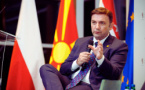
Ex-Foreign Minister: 250,000 Bulgarian Passports Factor into North Macedonia’s EU Integration Debate
Former Foreign Minister of North Macedonia, Bujar Osmani, has said that the current political trajectory in Skopje is the result of a broader balance of external and internal factors, including what he described as influence from anti-European forces and